Makeda, Queen of Sheba
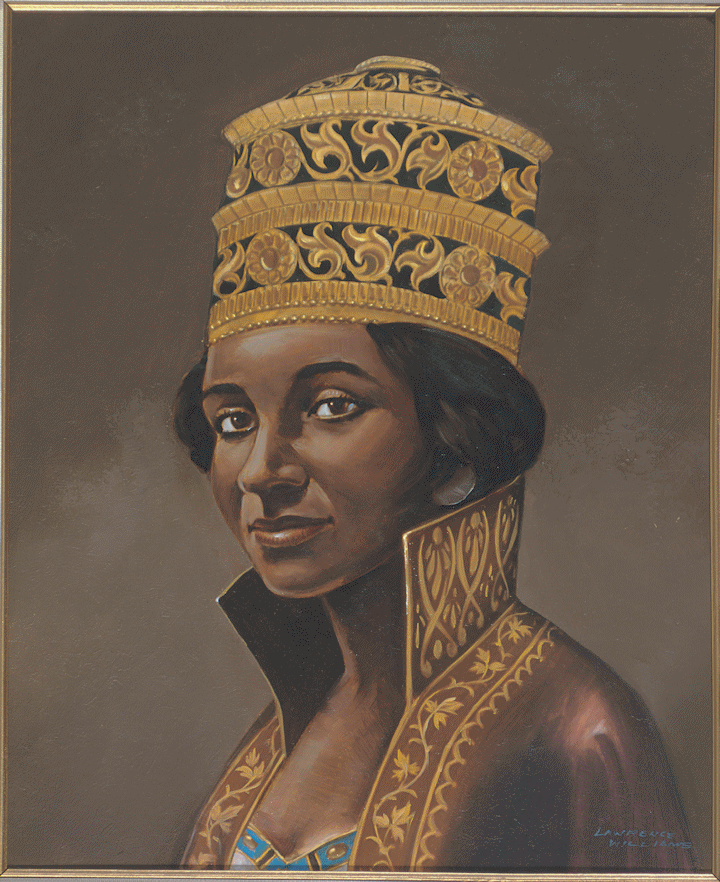 Makeda, known in history as the Queen of Sheba, ascended the Ethiopian throne in 1005 B.C., presiding over a huge Ethiopia that stretched from Southern (Upper) Egypt and Ethiopia across parts of Arabia, Syria, and India.
Makeda was exceptionally beautiful and exceedingly rich. Her trading ships reached scores of ports, many of the trips managed by her servant Tamrin. Tamrin heard of a promise made by a great and wise Jewish ruler named Solomon who was building a temple. King Solomon would pay in gold and silver all who brought goods to the temple. Tamrin told the Queen of Sheba, so she decided to take some goods to the king.
History records she left with a caravan of almost eight hundred camels, loaded with precious stones and other goods and valuables. Solomon, who in his Biblical writings described himself as Black, (Song of Solomon, Chapter 1, verses 5-6) welcomed the beautiful Black queen warmly. King Solomon wished to marry her and have a child by her, but she decided that she would return home. He made her promise that if she took something of his without first asking, she would stay and have a child by him Solomon prepared a great feast for her in which he had put a great amount of salt.
When Makeda retired to her bedroom, she was so thirsty she drank a great deal of water that was in large containers in her bedroom without first asking Solomon. Solomon himself caught her in her “transgression” and held her to the promise. Solomon gave her a ring and said “If a child be born, this ring shall be a sign, and if a boy child he shall come to me, and we shall crown him king of Ethiopia.” A boy child was born.
His mother gave him the royal name of Menelik. Menelik visited his father Solomon when he was twenty-two. The people knew at once he was Solomon’s son. Solomon exclaimed, “You look like my father David when he was young. Stay with me.” But Menelik returned to his mother accompanied with councilors and officers for his ascendancy to the throne of Ethiopia. His descendants have ruled Ethiopia nearly 2,800 years except for a brief period in the ninth and tenth centuries A.D.