James Forten
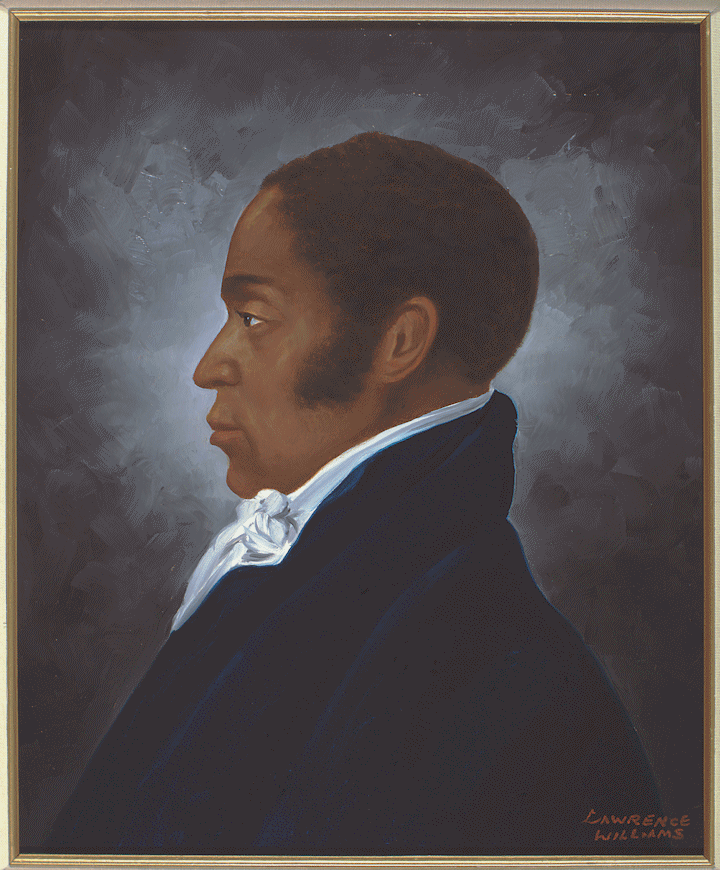 James Forten was an honorable, industrious, and committed activist dedicated to the antislavery forces at work during colonial America. Born free in Philadelphia, Pennsylvania, he was a powder boy on Stephen Decatur’s Royal Louis at the age of fourteen. He participated in victories over several English vessels. John Hope Franklin states in From Slavery to Freedom, “later, when he was captured and offered a home in England, he refused on the grounds that he felt he should suffer the prisoner’s lot in the cause of independence and to do less would be to betray his country.” When he finally left the Navy, Forten started out as an errand boy on the docks in Philadelphia and eventually became a wealthy businessman by operating a sail-making enterprise employing forty whites and Blacks. He amassed a fortune of over $100,000 which was a large sum for any man during the early nineteenth century.
James Forten was prominent during the age of militant abolitionists. He was a friend and financial supporter of William Lloyd Garrison, founder of the Liberator. In 1814, Forten, Bishop Richard Allen, and Absalom Jones called for 2,500 free Black men to defend Philadelphia against the British after the defeat of Washington, D.C. Within hours after the call went out, Black men reported to the State House Yard following the leadership of these three influential men. With Bishop Allen, Forten represented the free African-Americans of Philadelphia and submitted an antislavery petition to Congress to revise the Fugitive Slave Act of 1793.
He also opposed the concept and practice of colonization, which was the repatriation of Blacks to Liberia. In 1830, Forten was instrumental in bringing together free African-Americans from five states for the First Negro Convention to frame methods to improve life for them. According to Charles L. Blockson’s Pennsylvania’s Black History, “Forten frequently spoke from the pulpit of Bethel Church.”
The Humane Society presented Forten with a certificate of appreciation for his rescue of four persons from drowning in the Delaware River on four different occasions. James Forten was active in the Underground Railroad and included his family in the caring, clothing, and protection of escaping prisoners- of-war. His children and grand-daughter, Charlotte Forten, continued his legacy of involvement and activism to improve conditions for their people, long after his death in 1842.